
Commercial aviation has become one of the safest methods of transportation ever developed. Every day, thousands of aircraft carry millions of passengers across the world with remarkably high levels of safety and reliability. This success is not accidental. It is the result of decades of engineering improvements, strict regulations, comprehensive pilot training, sophisticated aircraft technology, and a safety culture that encourages proactive decision-making.
Even with these high standards, situations occasionally arise that require flight crews to take precautionary action. One of those events involved tui flight by6754 emergency landing which made an emergency landing shortly after departure. Although the word “emergency” naturally creates concern, it is important to understand that an emergency declaration does not necessarily indicate that an aircraft is about to crash or that passengers are facing immediate danger. In many cases, it simply allows pilots to receive priority assistance while they safely return to an airport for inspection.
The incident involving TUI Flight BY6754 attracted widespread attention because passengers witnessed an unexpected diversion, flight-tracking websites displayed the aircraft changing course, and news outlets quickly began reporting on the situation. Initial speculation centered on possible mechanical problems, but later reporting indicated that the diversion followed a bird strike. Regardless of the exact sequence of technical events, the outcome demonstrated how aviation safety systems are designed to protect everyone on board.
This article explores the emergency landing of TUI Flight BY6754, explains the aviation procedures that guide such decisions, examines the reported cause of the diversion, and discusses what travelers can learn from the event. Rather than relying on rumors, the focus remains on confirmed information and established aviation practices.
Overview of TUI Flight BY6754
TUI Flight BY6754 was operating as a scheduled commercial passenger service when the crew encountered an abnormal situation shortly after takeoff. After assessing the available information inside the cockpit, the pilots decided that returning to the ground was the safest course of action. They declared an emergency, coordinated with air traffic control, and diverted the aircraft to a suitable airport where emergency services were available if needed.
The aircraft landed safely, passengers disembarked without reported injuries, and the airplane was inspected by maintenance personnel before any further operational decisions were made.
Although dramatic headlines often describe these events as terrifying or life-threatening, aviation professionals generally view successful precautionary landings as evidence that safety procedures function exactly as intended. Pilots are trained to act conservatively whenever uncertainty exists, and airlines encourage crews to prioritize safety over maintaining schedules.
The successful outcome of Flight BY6754 highlights an important principle in commercial aviation: delaying or interrupting a journey is always preferable to accepting unnecessary risk.
Timeline of the Emergency Landing
While every aviation event follows its own unique sequence, the publicly reported information surrounding TUI Flight BY6754 allows a general understanding of how the incident unfolded.
The aircraft departed normally and began climbing after takeoff. During this early stage of flight, the crew became aware of an abnormal condition requiring further assessment. At this point, pilots followed established operating procedures by reviewing cockpit indications, consulting aircraft checklists, and communicating with air traffic control.
Recognizing that the safest option was to discontinue the planned flight, the crew declared an emergency. Declaring an emergency immediately provides important operational benefits. Air traffic controllers can clear surrounding traffic, assign priority routing, coordinate emergency responders, and minimize delays during the aircraft’s return.
The aircraft then proceeded toward the diversion airport using normal flight procedures. Throughout this process, pilots continuously monitored aircraft performance while cabin crew prepared passengers for landing according to standard operating procedures.
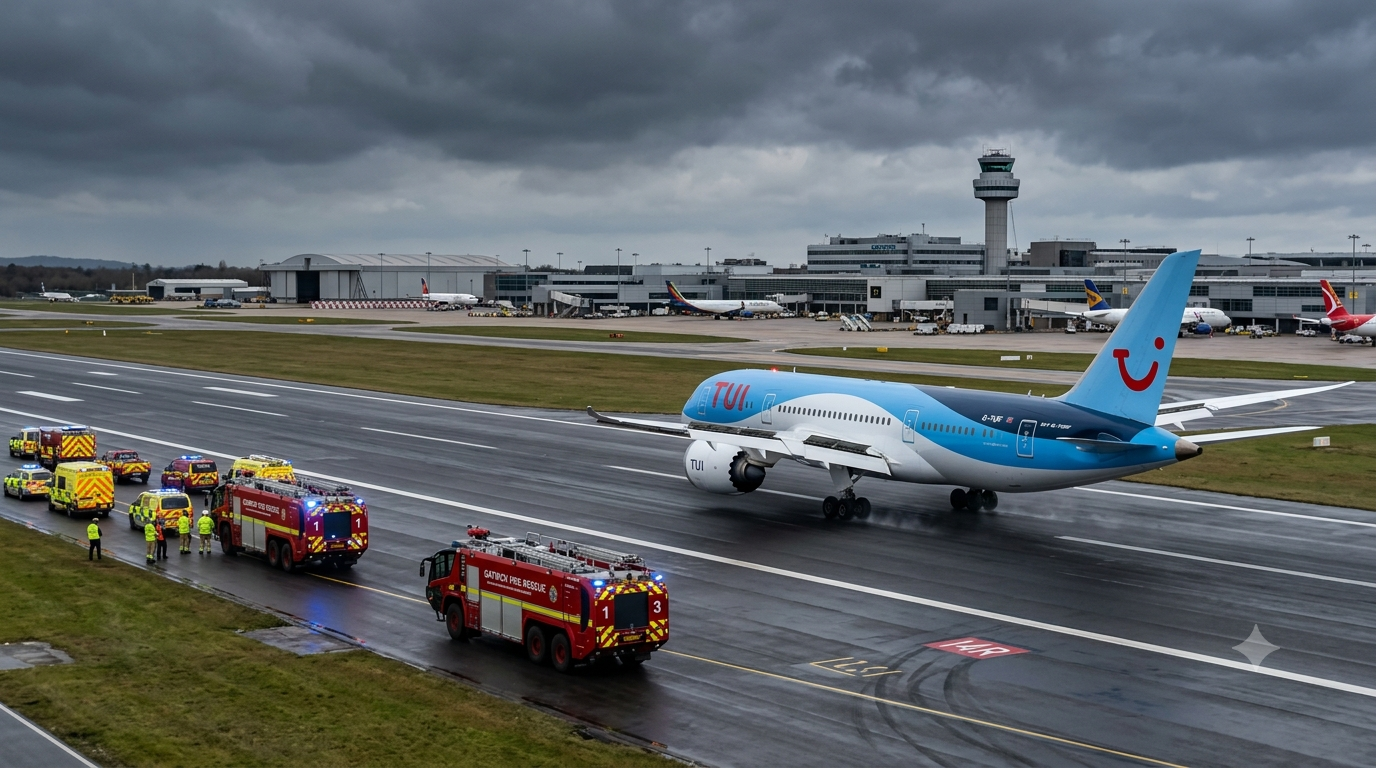
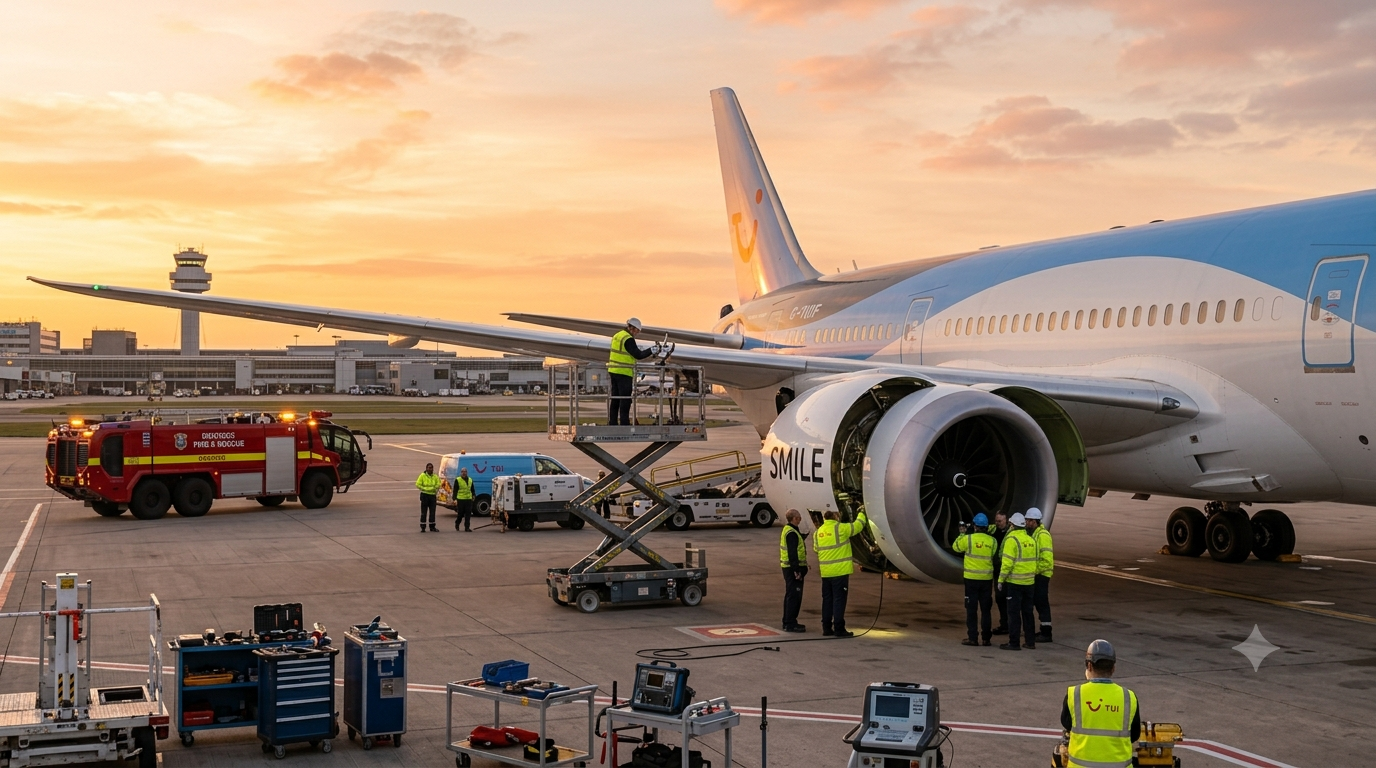
Emergency vehicles positioned themselves near the runway as a precaution, a routine response whenever an aircraft declares an emergency. Their presence does not necessarily indicate that firefighters expect an accident; rather, they stand ready in the unlikely event additional assistance becomes necessary.
The aircraft landed safely, taxied under its own power, and passengers were eventually able to leave the aircraft.
The incident concluded without injuries, demonstrating how multiple layers of aviation safety work together during unexpected events.
Why the Flight Declared an Emergency
Many travelers assume an emergency declaration means a disaster is unfolding inside the cockpit. In reality, the aviation definition of an emergency is much broader.
Pilots are encouraged to declare emergencies whenever they believe priority handling will improve safety. Airlines support this conservative philosophy because there is little disadvantage to requesting assistance when uncertainty exists.
A crew may declare an emergency for numerous reasons, including abnormal engine indications, smoke warnings, hydraulic issues, electrical faults, medical emergencies, cabin pressurization problems, or suspected bird strikes.
In the case of TUI Flight BY6754, later reports indicated that the diversion followed a bird strike. Even when an aircraft appears to continue flying normally after such an event, inspections are required to verify that engines, wings, fuselage components, sensors, and leading edges have not sustained damage.
Returning to the airport allows maintenance engineers to conduct detailed inspections rather than asking pilots to continue a long flight with unanswered questions about the aircraft’s condition.
From a safety perspective, this represents sound operational judgment rather than evidence of panic.
Understanding the Reported Bird Strike
Bird strikes are more common than many passengers realize. Because aircraft spend much of their time cruising at high altitudes where birds rarely fly, the greatest risk exists during takeoff and landing when aircraft operate close to the ground.
Modern airports invest heavily in wildlife management. Specialized teams monitor bird activity, modify habitats, use radar systems, and employ various techniques to reduce the likelihood of birds entering active runway areas.
Aircraft manufacturers also design engines and structures to tolerate many bird impacts. Certification standards require engines to demonstrate resilience under carefully defined testing conditions.
Even so, no pilot ignores a suspected bird strike.
Depending on where the bird makes contact, crews may observe unusual engine vibrations, abnormal instrument indications, unexpected sounds, or changes in aircraft performance. Sometimes there are no noticeable effects at all, but inspections remain essential because damage may not be immediately visible from the cockpit.
The reported bird strike involving Flight BY6754 illustrates why precautionary landings remain an important component of aviation safety. Choosing to land early enables engineers to inspect the aircraft thoroughly before additional flights take place.
Rather than viewing the diversion as a sign of danger, passengers can view it as evidence that the aviation industry consistently places safety ahead of convenience.
How Pilots Manage an Emergency Situation
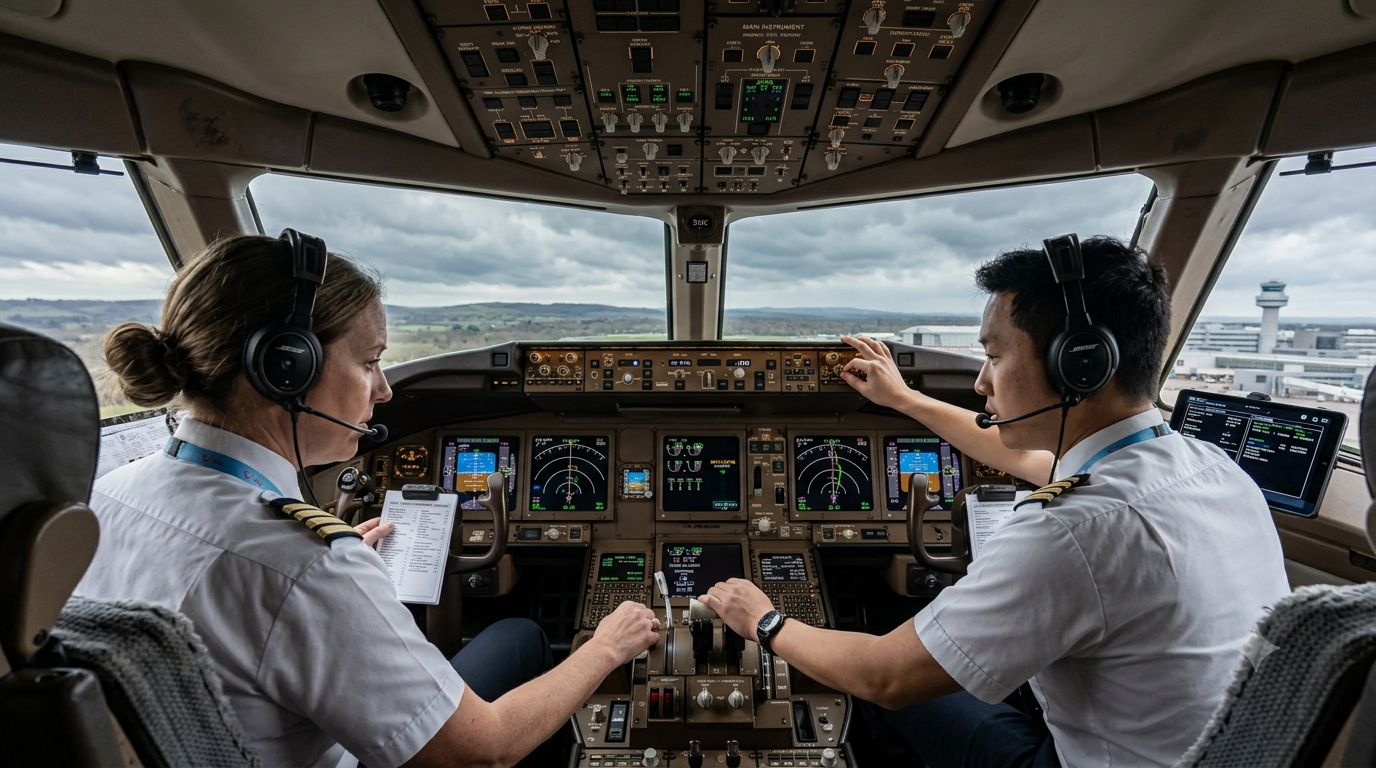
One of the biggest misconceptions about emergency landings is that they involve chaos inside the cockpit. Movies often portray pilots rushing between controls while alarms sound continuously, but the reality aboard a modern commercial aircraft is far more organized. Airline pilots spend hundreds of hours training for situations they may never encounter during their careers. Emergency procedures become second nature through simulator sessions that recreate everything from engine failures to electrical malfunctions, bird strikes, hydraulic problems, and severe weather.
When an abnormal event occurs shortly after takeoff, the first priority is always to maintain control of the aircraft. Pilots follow a simple principle taught from the beginning of flight training: fly the airplane first, navigate second, and communicate third. This sequence ensures that the aircraft remains stable before attention shifts to diagnosing the problem or speaking with air traffic control.
Once the aircraft is safely under control, the crew begins evaluating available information. Modern airliners are equipped with sophisticated monitoring systems that provide detailed information about engines, hydraulics, electrical systems, fuel, flight controls, and other critical components. These systems help pilots determine whether the issue requires immediate action or whether the aircraft can continue operating safely.
Standard operating procedures then guide every decision. Rather than relying on memory alone, pilots use official checklists developed by aircraft manufacturers and approved by aviation authorities. These checklists reduce the possibility of mistakes and ensure every required step is completed in the correct order.
During the reported incident involving TUI Flight BY6754, the decision to divert reflected this disciplined approach. Instead of continuing the planned journey while uncertainty existed, the crew chose the safest available option by returning the aircraft for inspection.
The Importance of Crew Resource Management
Commercial aviation places enormous emphasis on teamwork inside the cockpit. Most passenger aircraft operate with two pilots who continuously monitor one another’s actions, verify important decisions, and share responsibilities during every stage of flight.
This concept, known as Crew Resource Management (CRM), has become one of the most important safety improvements in aviation history. Rather than placing responsibility on a single individual, CRM encourages open communication, cross-checking, and collaborative decision-making.
If one pilot notices an abnormal indication, the other pilot independently reviews the information. Together they evaluate possible causes, consult checklists, communicate with dispatch if necessary, and determine the safest course of action.
This structured process significantly reduces the likelihood of human error. It also ensures that no important information is overlooked during stressful situations.
Events like the TUI Flight BY6754 emergency landing demonstrate how effective CRM can be. Safe outcomes rarely result from quick improvisation. Instead, they reflect careful planning, standardized procedures, and disciplined teamwork between experienced professionals.
Air Traffic Control’s Critical Role
While pilots manage the aircraft, air traffic controllers coordinate everything happening outside the cockpit. The moment a crew declares an emergency, controllers immediately begin creating the safest possible environment for the aircraft.
Their responsibilities include clearing surrounding traffic, assigning the most efficient route back to the airport, coordinating with emergency services, and providing pilots with updated weather information and runway conditions. Controllers may also arrange holding patterns if the aircraft needs additional time to complete checklists or burn fuel before landing.
Communication during an emergency is calm, concise, and highly structured. Aviation uses standardized phraseology to eliminate confusion between pilots and controllers, particularly when rapid decisions are required.
Because emergency aircraft receive priority handling, other flights may be delayed temporarily. Although passengers on those flights might experience inconvenience, this system ensures that aircraft requiring immediate assistance receive every available resource.
For TUI Flight BY6754, close coordination between the flight crew and air traffic control helped create the conditions necessary for a safe landing without unnecessary complications.
What Cabin Crew Do During an Emergency
Passengers usually see cabin crew serving refreshments, assisting with boarding, or answering travel-related questions. However, safety remains their primary responsibility.
Every flight attendant undergoes extensive training before working on commercial flights. That training includes emergency evacuations, firefighting, medical response, smoke procedures, decompression events, water landings, and emergency communication techniques.
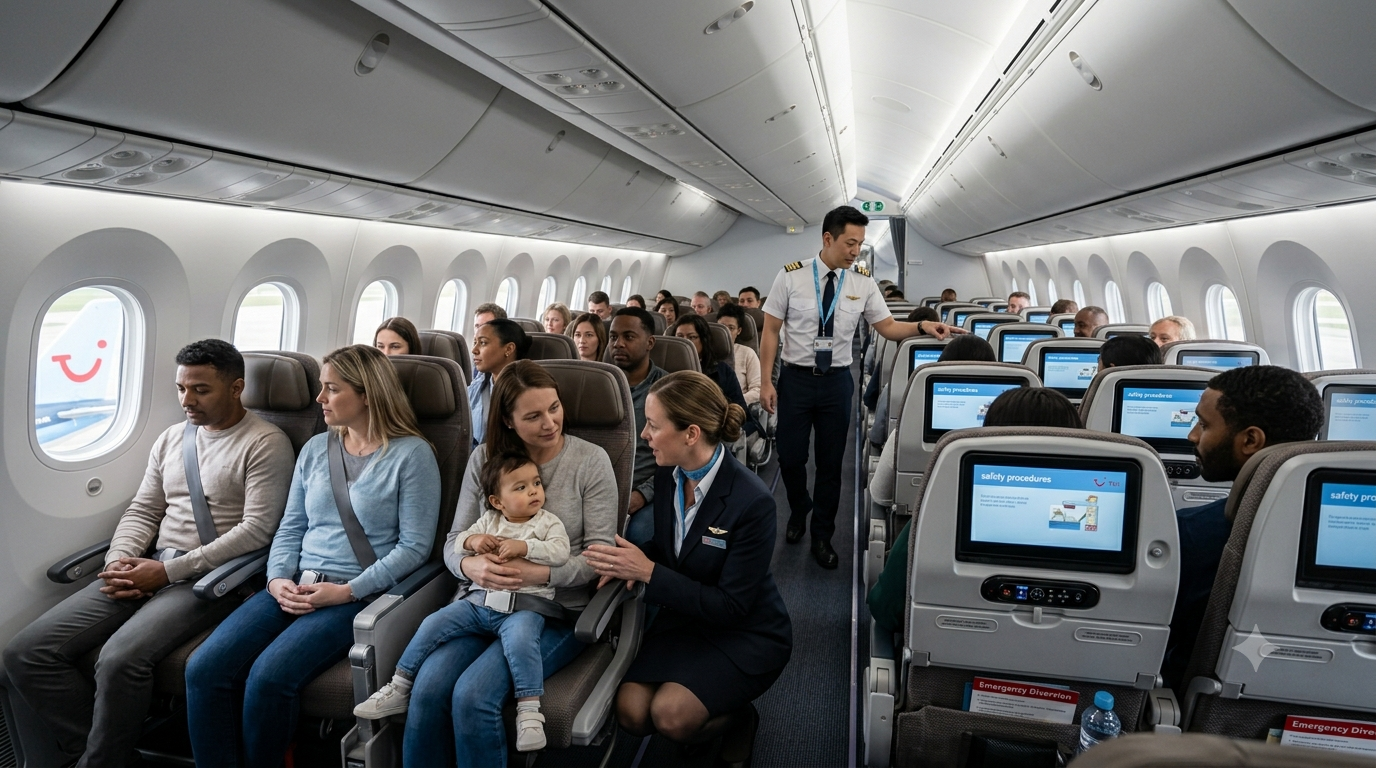
When a diversion occurs, cabin crew quickly transition from normal service duties to safety responsibilities. They secure the cabin, verify that passengers are seated correctly, ensure carry-on baggage is safely stowed, and prepare everyone for landing if additional precautions become necessary.
Equally important is their ability to remain calm. Passengers naturally look to flight attendants for reassurance during unexpected situations. A professional and confident cabin crew can significantly reduce anxiety throughout the aircraft simply through clear communication and composed behavior.
In many emergency situations, passengers later report that they did not fully appreciate the seriousness of the event until after landing because the crew remained calm and professional throughout the flight.
What Passengers May Experience During a Diversion
From a passenger’s perspective, an emergency landing often begins with an announcement from the captain explaining that the aircraft will return to the airport or divert elsewhere. The announcement is usually brief because pilots remain focused on flying the aircraft and completing operational checklists.
Travelers may notice the aircraft turning sooner than expected or descending earlier than planned. Depending on the nature of the situation, cabin service may stop immediately while flight attendants prepare the cabin for landing.
Emergency vehicles positioned alongside the runway often surprise passengers. However, this is a standard precaution whenever an emergency has been declared. Firefighters and rescue teams remain on standby even if the likelihood of needing their assistance is very small.
After landing, passengers may remain seated temporarily while engineers perform external inspections or while airport personnel coordinate the next steps. In many cases, travelers eventually continue their journey on another aircraft after the original airplane has been thoroughly examined.
Although such delays can be frustrating, they demonstrate the airline’s commitment to safety rather than speed.
Aircraft Inspection After Landing
Once an aircraft completes a precautionary landing, maintenance engineers begin a systematic inspection before it is allowed to return to service.
The exact inspection depends on the reason for the diversion. Following a reported bird strike, engineers typically examine engine fan blades, engine inlets, wing leading edges, cockpit windows, radomes, landing gear, and other exposed surfaces for signs of impact or hidden damage.
Modern inspection techniques include detailed visual examinations, specialized equipment, and maintenance procedures outlined by the aircraft manufacturer. If damage is discovered, repairs must be completed and documented before the aircraft is cleared for future flights.
Even when no significant damage is found, airlines often conduct additional precautionary inspections to ensure complete confidence in the aircraft’s condition.
These maintenance procedures represent another important layer of aviation safety. Every precautionary landing provides an opportunity to confirm that the aircraft remains fully airworthy before carrying passengers again.
Why Aviation Prioritizes Safety Over Schedules
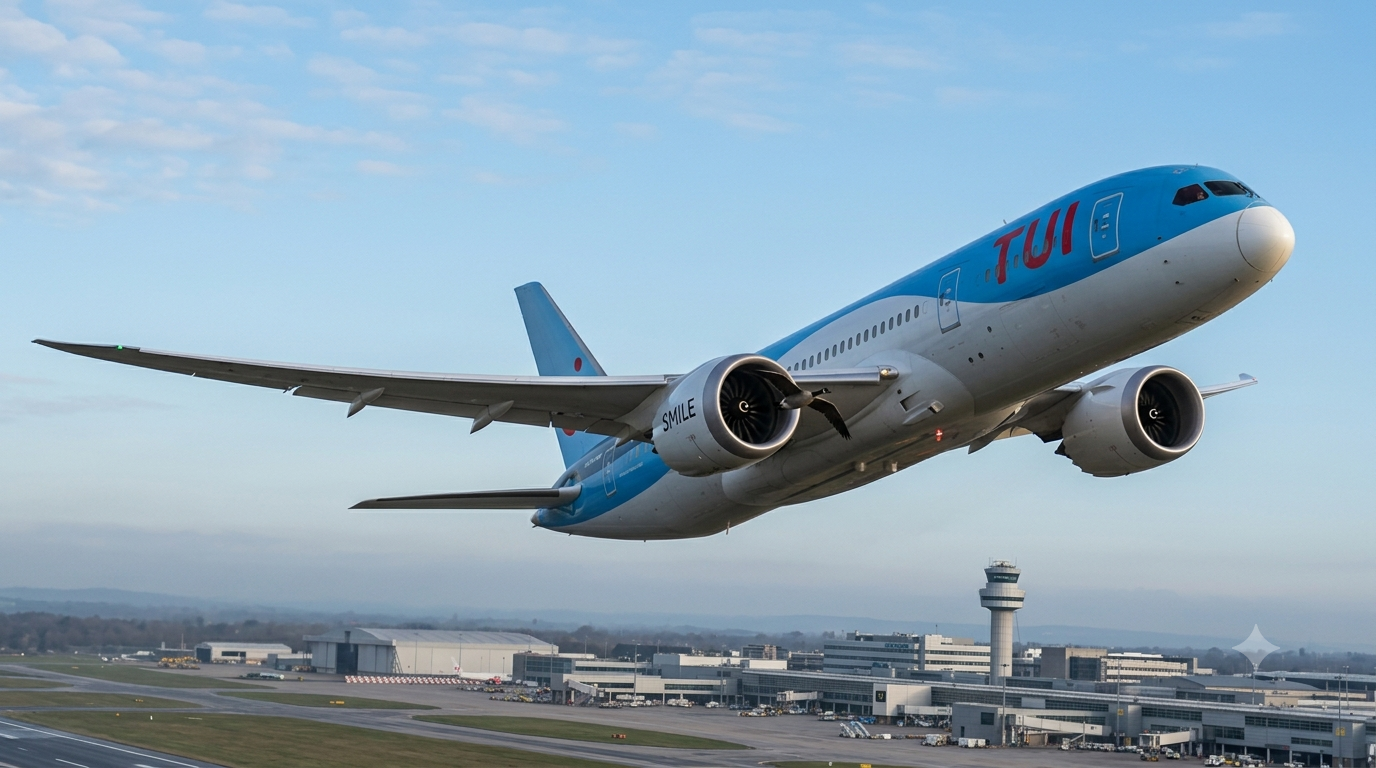
Airlines understand that diversions, cancellations, and delays create inconvenience for passengers and increase operating costs. Nevertheless, safety always takes precedence over maintaining schedules.
Pilots are never expected to continue a flight simply to avoid delays. Instead, they receive continuous support from airline operations whenever they decide that returning to an airport represents the safest option.
This philosophy explains why precautionary landings occur even when the aircraft appears capable of continuing its journey. The objective is not to prove that everything is normal but to remove uncertainty before proceeding.
The emergency landing involving TUI Flight BY6754 illustrates this mindset perfectly. The flight was interrupted, passengers experienced delays, and operational schedules changed, but everyone arrived safely. From an aviation safety perspective, that outcome represents a successful application of established procedures rather than an operational failure.
Common Myths About Emergency Landings
Whenever an aircraft declares an emergency, social media quickly fills with speculation. Some posts accurately describe what happened, while others exaggerate the situation or spread misinformation before official details become available. Understanding the facts behind emergency landings helps travelers separate dramatic headlines from reality.
One of the biggest myths is that an emergency declaration means the aircraft was on the verge of crashing. In reality, pilots declare emergencies for a wide range of situations, many of which are precautionary. Declaring an emergency simply gives the flight priority handling from air traffic control and ensures airport emergency services are ready if needed.
Another common misconception is that emergency vehicles surrounding a runway indicate that a crash is expected. This is not true. Firefighters, medical teams, and rescue personnel automatically respond whenever an emergency is declared because they must be prepared for every possible outcome. Most of the time, the aircraft lands normally, and their services are not required.
Some travelers also believe that if an aircraft lands safely, the original concern must have been insignificant. Aviation professionals strongly disagree with this view. The reason the outcome is often uneventful is because pilots choose to act early. Addressing a potential issue before it develops into something more serious is one of the foundations of modern aviation safety.
The TUI Flight BY6754 emergency landing illustrates this principle well. The safe landing was not evidence that the emergency was unnecessary. Instead, it showed that the crew followed established procedures designed to protect passengers before any uncertainty could increase.
Why Bird Strikes Remain an Aviation Challenge
Bird strikes have existed since the earliest days of powered flight, and despite advances in airport wildlife management, they cannot be eliminated entirely.
Airports use a wide variety of techniques to reduce bird activity near runways. Wildlife specialists monitor local habitats, use sound deterrents, inspect grass areas, employ radar systems in some locations, and work continuously to minimize the presence of birds near aircraft operations.
Even with these efforts, birds remain part of the natural environment. Aircraft spend their most vulnerable moments—takeoff and landing—at the same altitudes where many birds fly.
Fortunately, aircraft manufacturers design modern airliners with this risk in mind. Engines undergo certification testing to demonstrate their ability to tolerate certain bird impacts, and aircraft structures are engineered to withstand many types of encounters.
However, every bird strike is different. The size of the bird, the speed of the aircraft, the location of the impact, and the number of birds involved all influence the outcome. For that reason, pilots never assume an aircraft is undamaged simply because it continues flying normally.
Returning to the airport for inspection remains the safest and most responsible decision whenever questions exist about the aircraft’s condition.
Passenger Rights Following an Emergency Diversion
An emergency diversion often leaves passengers wondering what happens next. Although each airline follows its own customer service policies, several common procedures usually apply.
The airline’s first priority is ensuring everyone has safely left the aircraft. Once passengers are inside the terminal, airline representatives begin arranging onward travel, providing updates, and explaining available options.
Depending on the circumstances, passengers may continue their journey on another aircraft, wait while the original aircraft undergoes inspection, or receive alternative travel arrangements if delays become significant.
If meals, accommodation, or transportation become necessary because of extended delays, airlines typically provide assistance according to their policies and applicable passenger rights regulations.
Communication during these situations is especially important. Travelers appreciate clear explanations, realistic timelines, and regular updates, even when airline staff do not yet have every answer.
Most passengers understand that safety comes before convenience, but timely information helps reduce uncertainty and frustration during unexpected disruptions.
The Psychological Impact of an Emergency Landing
Even when everyone reaches the ground safely, an emergency landing can be an emotional experience.
Passengers react differently depending on their previous flying experience, personality, and understanding of aviation. Some remain calm throughout the event, while others experience significant anxiety despite the aircraft operating safely.
One reason emergency declarations create concern is that passengers rarely have access to the same information available to pilots. A brief announcement from the captain may leave many questions unanswered, allowing imagination to fill the gaps.
After landing, travelers often replay the experience in their minds, discussing it with family members or sharing their stories online. Some passengers become temporarily nervous about future flights, while others develop a greater appreciation for the professionalism of airline crews.
Psychologists who study travel anxiety often recommend learning more about aviation safety. Understanding why pilots make precautionary decisions and how extensively crews train for unusual situations can help reduce unnecessary fear.
The successful outcome of Flight BY6754 serves as a reminder that emergency procedures exist precisely because the aviation industry plans for unexpected events long before they occur.
Lessons from the TUI Flight BY6754 Emergency Landing
Although every aviation event is unique, several broader lessons emerge from the reported emergency involving TUI Flight BY6754.
The first lesson is that pilots are trained to prioritize safety above schedules. Returning to the airport may inconvenience passengers, but it eliminates unnecessary uncertainty and allows maintenance teams to inspect the aircraft thoroughly.
The second lesson involves teamwork. A successful emergency landing depends on coordination between pilots, cabin crew, air traffic controllers, airport emergency services, maintenance engineers, and airline operations personnel. Each group contributes to the safe outcome.
Third, modern aviation systems are designed with multiple layers of protection. Even when one unexpected event occurs, numerous backup procedures exist to reduce risk and support safe decision-making.
Finally, passengers should remember that precautionary landings are evidence of safety working as intended—not signs that aviation has failed. The willingness to interrupt a flight whenever questions arise reflects the industry’s conservative approach to risk management.
How Incidents Like BY6754 Improve Aviation
Every operational event, whether minor or significant, becomes an opportunity for learning.
Airlines routinely conduct internal reviews after diversions, emergency declarations, and precautionary landings. Maintenance findings, crew reports, operational decisions, and technical data are carefully examined to determine whether improvements can be made.
If any new safety information emerges, airlines may update procedures, revise training materials, or share lessons with manufacturers and aviation authorities.
This culture of continuous improvement is one reason commercial aviation continues to achieve exceptional safety standards year after year.
Rather than hiding operational events, the aviation industry studies them in detail so future flights become even safer.
Frequently Asked Questions (Part 1)
Was TUI Flight BY6754 involved in a crash?
No. The aircraft landed safely after the crew declared an emergency and diverted the flight. There were no reported injuries resulting from the landing.
Why did the pilots declare an emergency?
Public reporting indicated that the diversion followed a reported bird strike shortly after departure. Declaring an emergency allowed the crew to receive priority handling and return the aircraft for inspection.
Are bird strikes dangerous?
Most bird strikes do not result in serious damage, but every strike must be taken seriously. Pilots follow established procedures to assess the situation and determine whether a precautionary landing is appropriate.
Why didn’t the crew continue to the destination?
Commercial airlines prioritize safety over maintaining schedules. If uncertainty exists regarding an aircraft’s condition, returning to an airport for inspection is often the safest option.
Are emergency landings common?
They are relatively uncommon compared to the enormous number of flights operating every day. However, aviation crews train extensively for such situations so they can respond effectively whenever they occur.
Final Thoughts
The emergency landing involving TUI Flight BY6754 attracted widespread public attention because any unexpected diversion naturally raises questions about passenger safety and aircraft reliability. However, the successful outcome of the incident offers a reassuring reminder of how modern aviation is designed to handle unexpected situations.
From the pilots’ decision to return the aircraft, to the coordination with air traffic control, the readiness of airport emergency services, and the detailed maintenance inspections that followed, every stage reflected a well-established system built around minimizing risk. Rather than indicating a failure of aviation safety, the diversion demonstrated those safety systems working exactly as intended.
For travelers, the incident reinforces several important messages. Emergency declarations are precautionary tools, not automatic signs of catastrophe. Bird strikes, while taken seriously, are known operational risks that airlines prepare for extensively. Most importantly, commercial aviation remains one of the safest ways to travel because the industry consistently chooses caution over convenience.
As aviation technology, pilot training, and maintenance practices continue to evolve, events like the TUI Flight BY6754 emergency landing contribute to ongoing learning and continuous improvement. Every safely managed incident strengthens the industry’s ability to protect passengers on future flights.